What is Xporate beyond workspace discovery? Which services are core? Which buyers need a workspace, a compliant address, a company setup workflow, or expansion support?
Xporate website rebuild case study
From workspace search to founder infrastructure.
Xporate already had more value than the old website could explain. We rebuilt the strategy around two business engines: workspace discovery and the corporate backbone founders need to start, stay compliant, and scale.
Founder clarity
2
Question rounds before rebuild architecture was finalized.
Business model
2
Engines clarified: Workspaces Marketplace and Corporate Backbone.
Buyer routing
6
Outcome paths for founders, workspace seekers, compliance, legal, UAE, and funding readiness.
Delivery state
Ready
Demo rebuild and implementation framework prepared for final launch.
Case summary
The old site made Xporate look narrower than the business actually was.
Client
Xporate, a workspace and business support platform serving Indian founders and companies.
Starting point
A workspace discovery site where deeper business setup, compliance, and expansion value was not clearly owned.
Work delivered
Founder clarity rounds, service architecture, navigation restructure, homepage strategy, and page-ready rebuild framework.
Launch status
The rebuild is in demo/final-check stage. This case study focuses on strategic transformation, with traffic claims reserved for post-launch data.
Challenge
What was broken
The website was selling a search box. The business needed to sell operating confidence.
Xporate did not only help people find a workspace. The business also had a path into virtual office, company and GST setup, compliance, legal support, Dubai/UAE expansion, and funding readiness. The old site made those services feel secondary, scattered, or hard to understand.
01
Workspace-first positioning
The homepage led with “find a workspace,” which made Xporate look closer to a listing platform than a strategic founder support partner.
02
Services without hierarchy
Many useful services existed, but buyers could not quickly understand which outcome path fit them.
03
No buyer route logic
A founder starting a company, a team needing a compliant address, and a business expanding to UAE should not be forced through the same generic journey.
Before and after
The surface changed, but the bigger shift was the business model becoming legible.
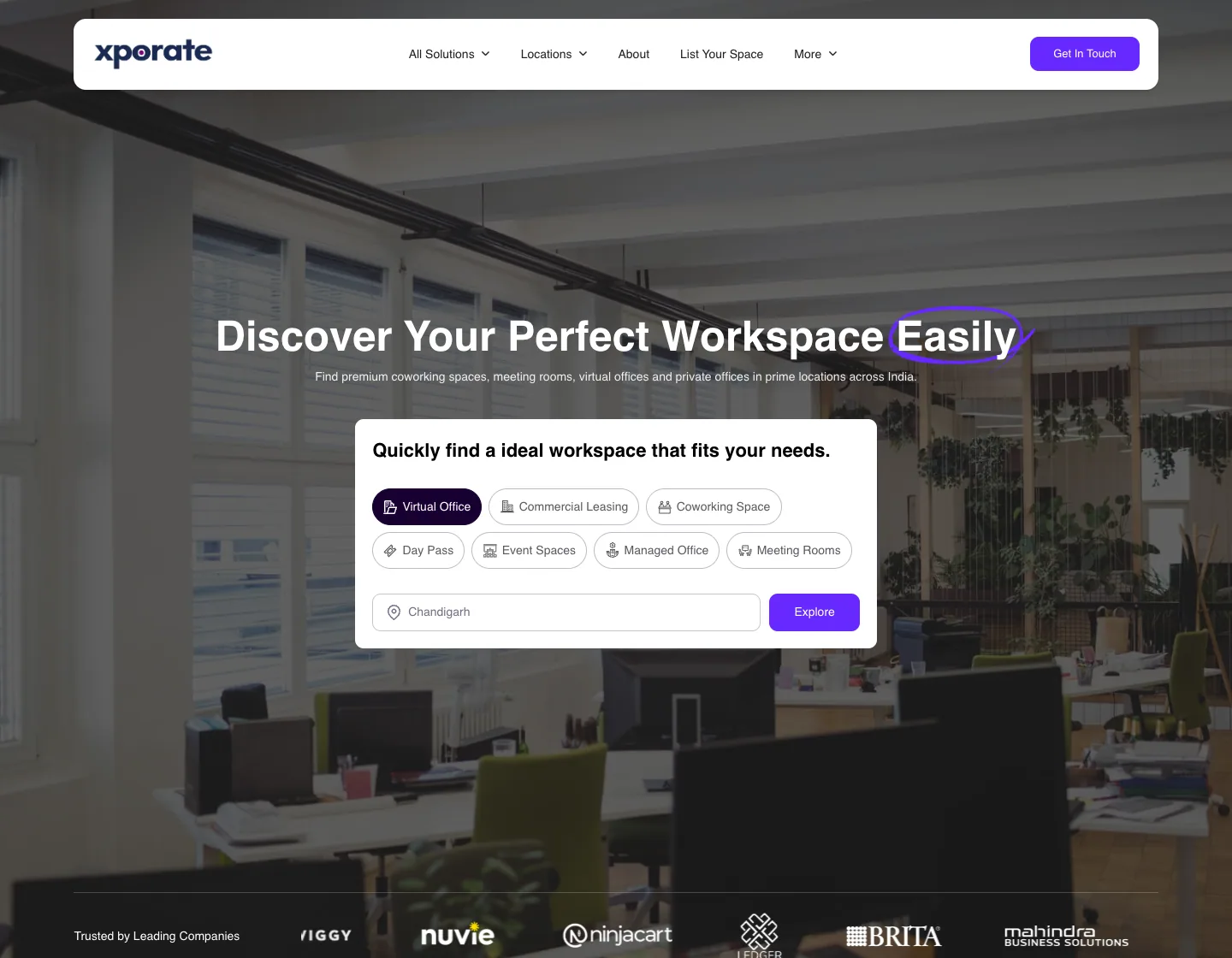
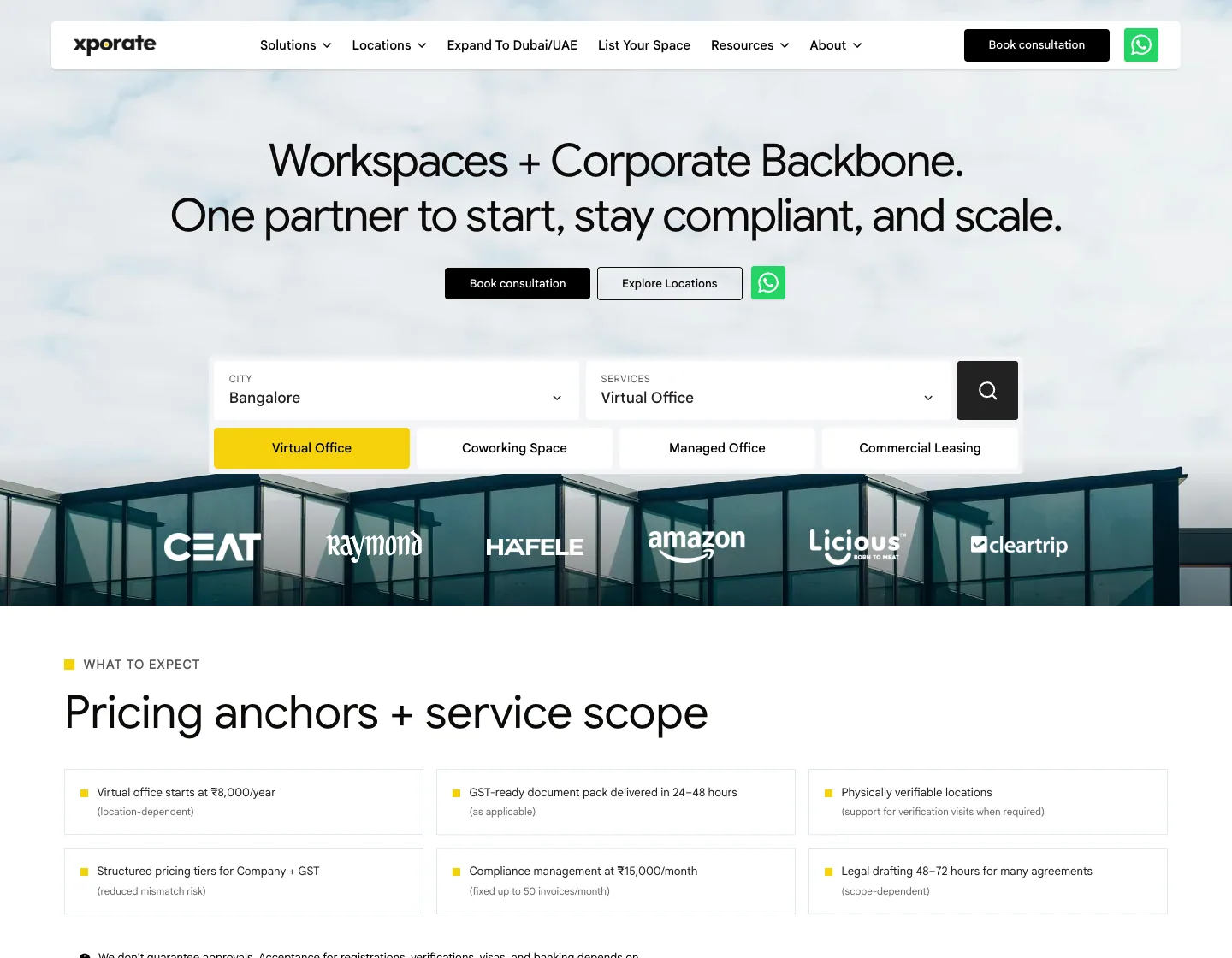
Submenu architecture
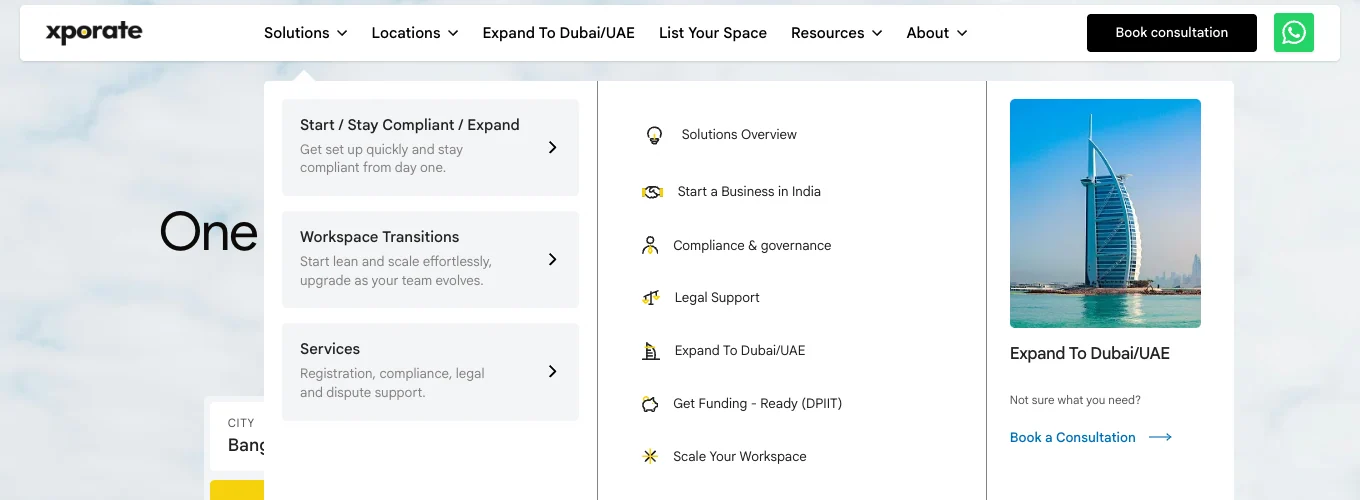
The submenu became the clearest proof of the rebuilt business model.
The important change was not simply adding more top-level links. The rebuilt Solutions submenu explains how Xporate routes founders by business stage: start, stay compliant, expand, shift workspace models, or choose a specific service route.

Strategy
Founder clarity rounds
We used questions before pages, because page building without business clarity is expensive guessing.
The rebuild was shaped through two founder question rounds. The goal was to make Xporate’s real commercial model visible: what the business sells, who each route is for, what should become a page, and where buyers need pricing, scope, or risk clarity before they enquire.
Which outcomes need their own route? What pricing anchors can be shown? Where do disclaimers reduce wrong-fit leads? What should the consultation solve?
Service architecture
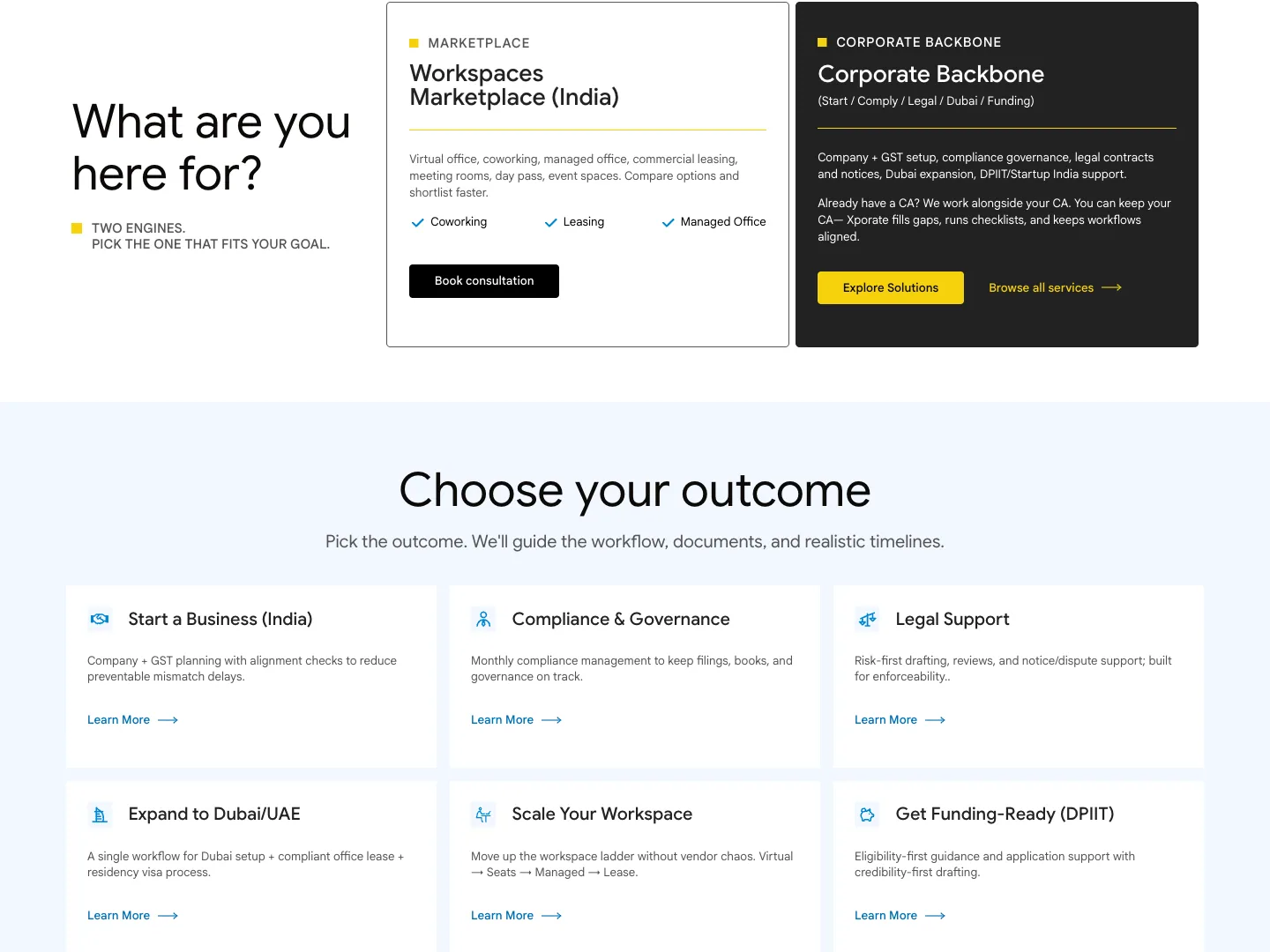
The rebuild gave founders a way to choose the right outcome, not just browse services.
This is where the case study becomes commercially useful for SEO Informatica: messy founder-led offers need clean buyer paths before SEO, ads, or content can compound.
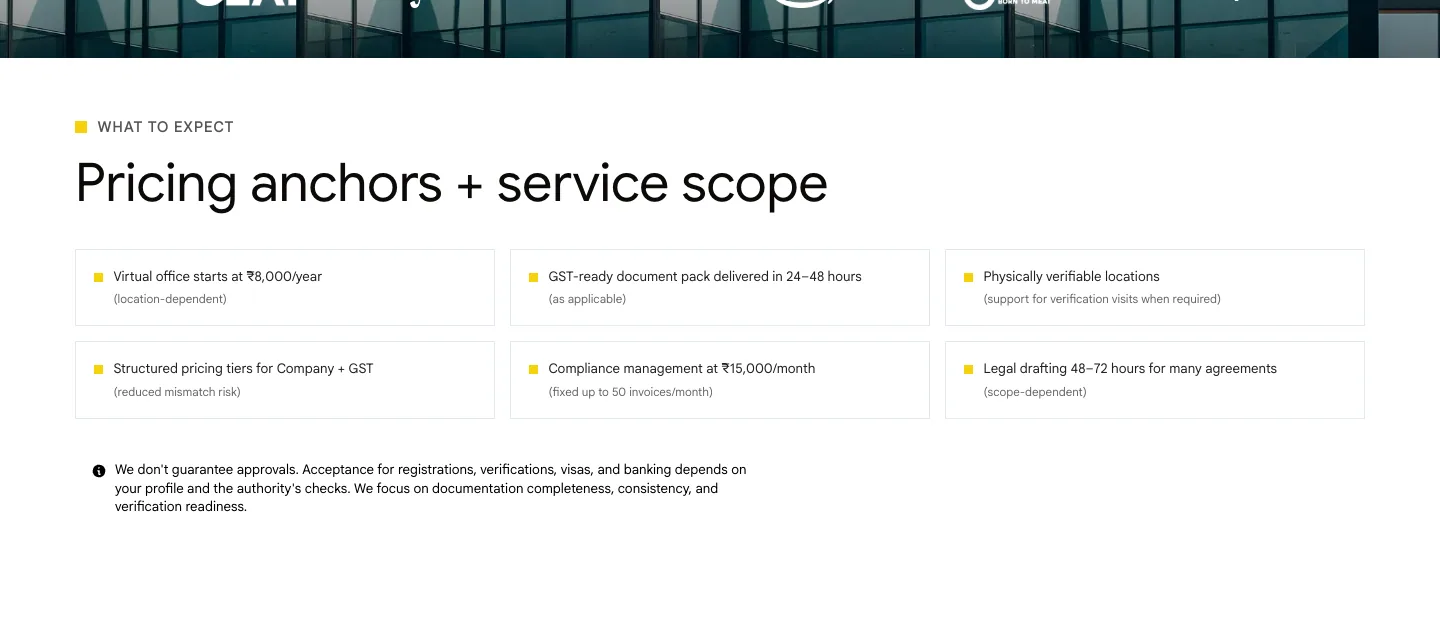
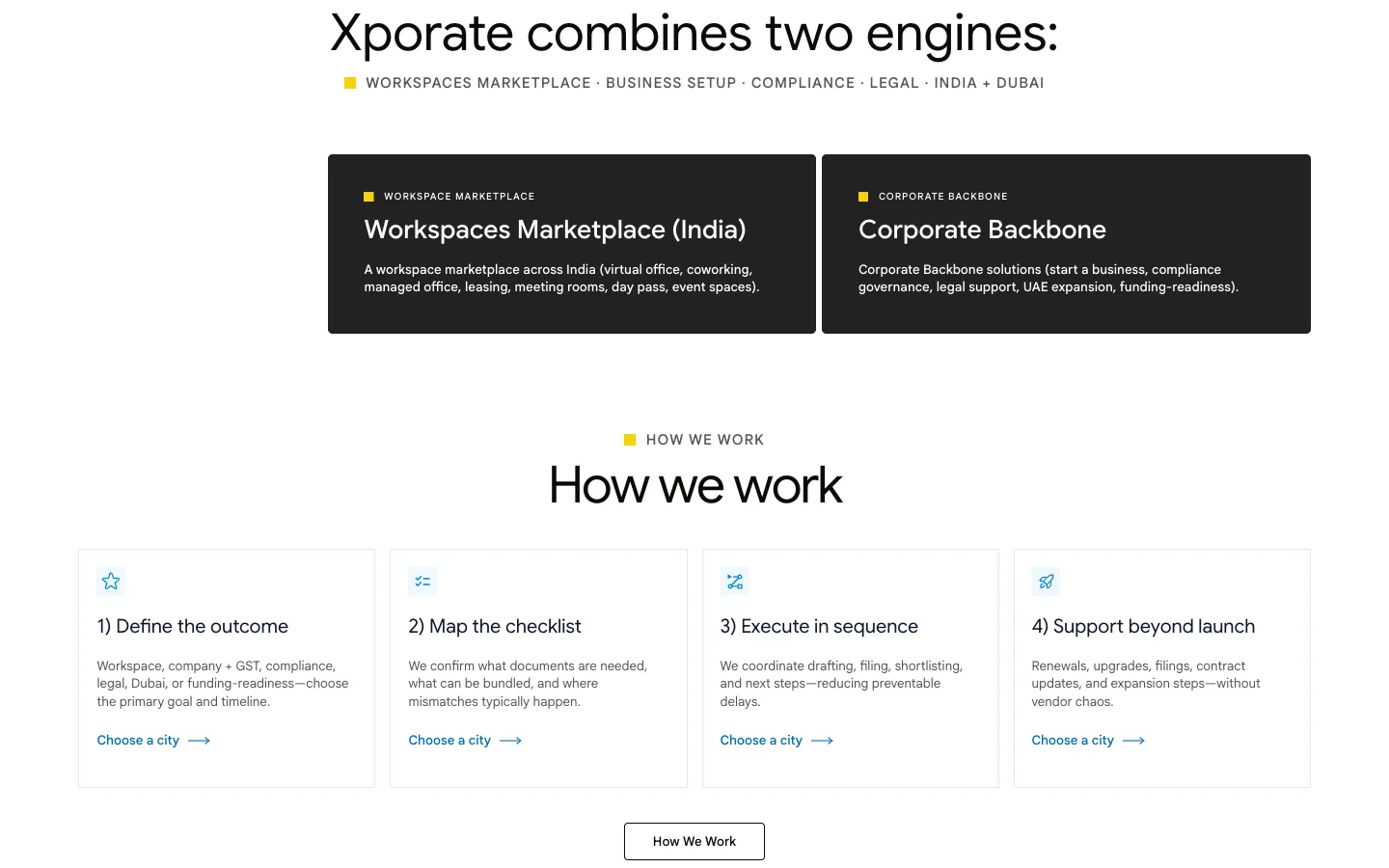
Workspaces and Corporate Backbone were split into separate decision paths.
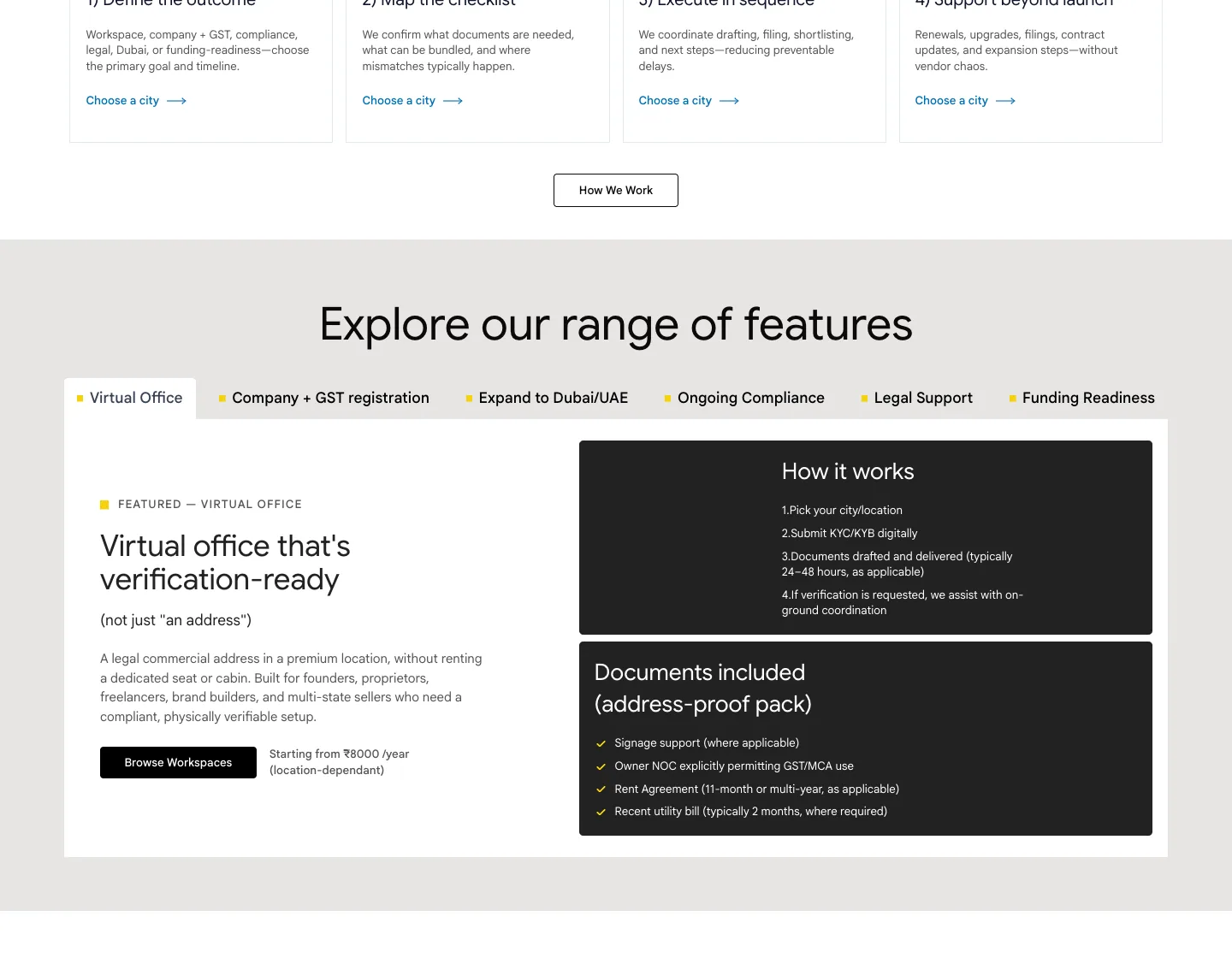
Pricing, documents, verification, and disclaimers made the offer sharper.
The process explained how Xporate moves founders from goal to execution.
Implementation-ready framework
New services were not dumped onto the homepage. They were organized into a usable system.
Virtual office, Company + GST registration, UAE expansion, compliance, legal support, and funding readiness were turned into routes that can support service pages, SEO content, consultation flows, and sales conversations.
Start a BusinessCompany + GST route with aligned details and reduced mismatch risk.
Stay CompliantCompliance management, books, filings, governance, and operational continuity.
Expand to UAEDubai setup, office, visa workflow, and consultation-led next step.
Get Funding-ReadyDPIIT and Startup India support framed as eligibility-first guidance.
Result
Strategic result
The output was not a prettier homepage. It was a clearer business operating system for the website.
Because the rebuild is not live yet, traffic lifts are intentionally excluded. The real result today is a launch-ready framework that gives Xporate stronger positioning, clearer buyer routing, better service ownership, and cleaner lead qualification.
Positioning
From workspace finder to founder infrastructure partner.
SEO readiness
Service clusters now have page ownership and query relevance.
Lead quality
Pricing anchors and disclaimers help filter better-fit enquiries.
Sales clarity
Consultation paths match founder outcomes instead of generic contact intent.
A founder-led business with many services does not need more pages first. It needs a sharper model, clearer buyer routes, and then pages that make the model obvious.
Frequently Asked Questions
What made this different from a normal website redesign?
This was not only a visual redesign. The work clarified the business model, rebuilt the solutions submenu, separated service engines, mapped buyer outcomes, and created an implementation-ready page framework.
Why did Xporate need service architecture before implementation?
Xporate had more value than the old site communicated. The website needed to explain workspaces, virtual office, company and GST setup, compliance, legal, UAE expansion, and funding readiness without becoming messy.
What did the founder clarity rounds change?
The rounds separated core business engines, identified buyer routes, defined service page ownership, exposed pricing and scope anchors, and reduced wrong-fit enquiry risk with clearer disclaimers.
Why are there no traffic results in this case study yet?
The rebuild is still in demo and final-check stage. Post-launch traffic results should be added after the site is live and measurable. This case study focuses on strategic rebuild work that prepares the site for launch and growth.
Can this approach work for other founder-led businesses?
Yes. It is especially useful when the business has multiple services, unclear buyer paths, buried offers, weak page ownership, and a website that undersells what the company actually does.
How does this support lead generation?
Lead generation improves when buyers can self-identify the right route, understand the offer scope, see the next step, and avoid sending vague enquiries that sales teams have to untangle later.